SFA Hygiene Audits & Demerit Point Prevention: The 2026 Commercial Kitchen Pest Control Checklist for Singapore F&B Operators
August 14, 2026Preventing Bed Bugs After Overseas Travel: The Complete Post-Trip Quarantine and Decontamination Protocol for Singapore Homes (2026 Guide)
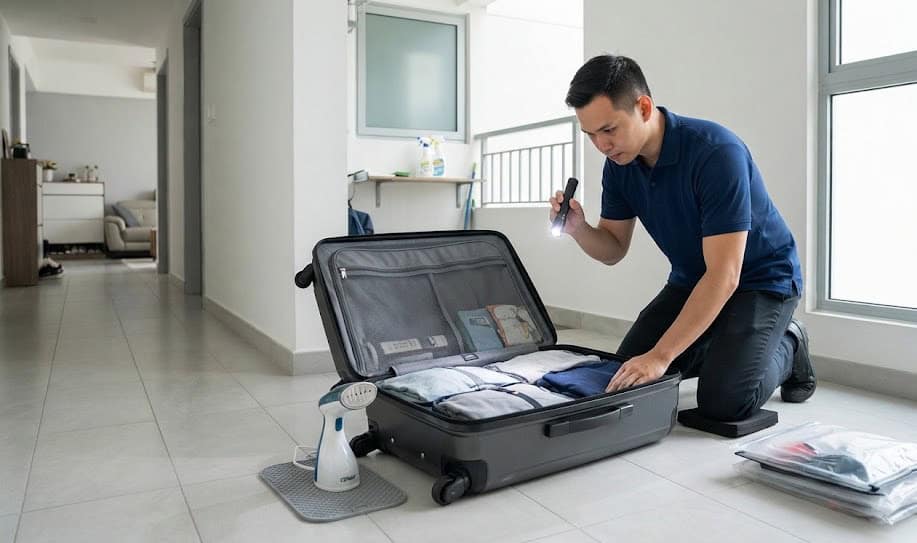
Systematic luggage inspection and high-heat wash cycle quarantine prevents overseas bed bug hitchhikers from infesting Singapore homes.
The Post-Holiday Hitchhiker Reality: Why Singapore Homes Face Heightened Infestation Risks
Touching down at Changi Airport after an exhilarating overseas trip is always a relief, but stepping back into your HDB flat or private condo with uninspected luggage poses a massive biological risk to your household. Modern international travel patterns connect Singaporeans to global urban hotspots where bed bug (Cimex lectularius and Cimex hemipterus) resurgences are documented across hospitality networks, boutique hotels, high-speed rail cabins, and aircraft cargo holds. Whether you spent the June school holidays touring Europe or took a quick December shopping getaway to Seoul, Tokyo, or London, these parasitic insects do not discriminate between budget hostels and five-star luxury suites.
Bed bugs do not jump or fly. They rely purely on passive vector transport, exploiting the structural crevices, nylon seams, zipper tracts, and wheel housings of modern luggage. Once introduced into a residential building in Singapore, our consistent indoor ambient climate (typically 28°C to 32°C with 75% to 85% relative humidity) accelerates their life cycle dramatically compared to temperate regions. An imported female bed bug that mated before your flight can lay between one to seven viable eggs daily, transforming a single hitchhiker into an entrenched, multi-room infestation within weeks.
High-density residential architecture in Singapore magnifies this vulnerability. Multi-story HDB blocks and modern condominium complexes share interconnected utility risers, electrical conduits, and perimeter wall cavities. When an infestation establishes itself in a master bedroom, DIY chemical sprays often cause localized insect scattering, driving nymphs and adult bed bugs through wall voids and common door gaps into adjacent units. Stopping the insect at your doorstep via a systematic, post-travel quarantine protocol is the only mathematically reliable way to safeguard your property and prevent thousands of dollars in remediation costs.
Thermal Lethality Kinetics and Biological Profile of Cimex lectularius
Understanding why bed bugs survive standard laundering requires examining their physiology. Adult bed bugs possess a waxy, sclerotized chitin exoskeleton that prevents desiccation, allowing them to endure prolonged periods without a blood meal. Immature nymphs pass through five instars, shedding their exoskeleton at each stage before reaching reproductive maturity. Most crucially, their eggs are coated with a sticky proteinaceous substance that cements them deep within fabric folds, mattress piping, and luggage seams.
Standard room-temperature water washing and ambient air-drying fail to disrupt bed bug cellular structure. Total biological eradication depends on reaching specific thermal kill thresholds that denature the insect’s structural proteins and melt the protective lipid layer of the eggshell. Entomological research demonstrates that thermal lethality is an inverse function of temperature and exposure duration:
- Sub-lethal Zone (Below 45°C): Triggers erratic movement and dispersal behavior without achieving reliable mortality. Nymphs and eggs survive prolonged exposure in standard domestic warm washes.
- Adult Lethal Threshold (48°C to 50°C): Achieves 100% adult and nymph mortality within 20 to 30 minutes of continuous, direct heat penetration.
- Complete Ovicidal Threshold (55°C to 60°C+): The required thermal exposure window to achieve 100% egg denaturation within 5 to 10 minutes of direct contact, neutralizing the protective outer chorion layer.
Thermal Lethality Kinetics: Temperature vs. Exposure Duration for 100% Bed Bug & Egg Eradication
Data verified under controlled entomological laboratory conditions. Penetration time through dense fabrics adds to baseline duration.
The Changi-to-Doorstep Quarantine Protocol: The “Zero-Bedroom” Rule
The most catastrophic error returning travelers make is dragging suitcases straight into bedrooms, placing open luggage across upholstered beds, or unpacking directly over plush carpets and engineered parquet flooring. If an inseminated female bug or live nymph falls onto a bed frame or baseboard, it immediately seeks harbor in screw holes, headboard joints, or mattress piping. Once embedded in timber furniture, eradicating them demands extensive professional chemical remediation.
Enforce a strict Zero-Bedroom Unpacking Policy from the moment you step through your front door. Establish a dedicated Decontamination Zone in a non-carpeted, hard-surface area of the home. Ideal spaces in Singapore layouts include:
- The Service Yard or Wet Kitchen: Homogeneous or ceramic floor tiles provide no natural hiding spots, and stray insects can be instantly spotted against light-colored grouting.
- The Main Entrance Foyer: Keeps external luggage quarantined near the main door before entering the living quarters.
- A Dry Common Bathroom: White porcelain tiles and sealed floor traps ensure dropped hitchhikers cannot burrow into floorboards or escape behind skirting.
Before unzipping your bags, seal off adjacent bedroom doors. Prepare heavy-duty transparent contractor bags or water-soluble laundry bags on the floor. Transfer all fabric contents directly from the luggage into sealed plastic bags right in the quarantine zone. Do not sort worn clothes on the floor or leave piles sitting overnight. If you arrive late at night and feel completely exhausted, do not leave open luggage in the living room; leave the bags fully zipped inside the bathroom or service yard until morning.
Luggage Material Diagnostic & Vulnerability Matrix
Not all luggage poses the same level of biosecurity risk. The outer casing material, zipper construction, structural frame, and internal liner design determine how easily bed bugs can penetrate your luggage and how rigorously you can apply heat or steam treatments without damaging the suitcase.
| Luggage Type | Primary Harborage Hotspots | Seam & Zipper Vulnerability | Thermal / Steam Tolerance | Biosecurity Risk Rating |
|---|---|---|---|---|
| Hardshell Polycarbonate / ABS | Corner wheel assemblies, rubber gasket perimeters, retractable trolley handle housings. | Low-to-Medium. Solid shell blocks direct insect entry; bugs congregate strictly along the zipper teeth and external seam joints. | High. Exterior withstands dry steam up to 100°C; internal fabric liners require careful spot-steaming. | Lowest Risk |
| Ballistic Nylon / Cordura Softshell | Exterior document pockets, woven fabric pores, expandable zipper pleats, structural piping. | High. Micro-weave fabrics provide textured grip for adult bugs and nymphs to anchor eggs within exterior fold flaps. | Moderate. Water-resistant coatings may blister if sustained steam exceeds 120°C; requires controlled 60°C dry steam. | Moderate Risk |
| Heavyweight Canvas / Duffel Bags | Rough fiber weave, unsealed inner seams, base cardboard stiffeners, nylon strap attachments. | Very High. Porous natural fibers provide ideal surface roughness for egg adhesion across the entire body of the bag. | Very High. Can be laundered directly in high-heat industrial washing machines and tumbled dry at 60°C+. | High Risk |
| Hiking Backpacks / Rucksacks | Lumbar padding foam, mesh shoulder straps, internal aluminum frame channels, hydration bladders. | Critical. Multi-compartment designs feature hundreds of concealed corners, deep foam crevices, and open mesh pockets. | Low-to-Moderate. Technical synthetic foams and waterproof laminates degrade under direct commercial dryers; requires chamber heating or meticulous steam extraction. | Extreme Risk |
The Thermal Shock Laundry Workflow for Returning Travelers
Clothing represents the most frequent vehicle for bed bug transmission into wardrobe systems. Merely washing your travel garments on a standard 30°C or 40°C “Eco” or “Quick Wash” cycle will not kill bed bug eggs. In fact, standard wash cycles can dislodge viable eggs, allowing them to cling to other garments during the rinse phase.
Executing an effective thermal shock decontamination cycle requires strict adherence to temperature thresholds and mechanical action:
1. Direct Chamber Loading
Transport sealed laundry bags directly to your front-loading or top-loading washing machine. Empty the contents straight into the drum without placing garments on the floor or laundry hamper. Discard single-use plastic bags immediately into an external refuse chute or seal them inside an outdoor bin.
2. The Wash Phase Calibration
Set your washing machine to a dedicated Hygiene / Anti-Allergy or 60°C Hot Wash cycle. Modern Singapore home washing machines with built-in water heaters maintain this temperature for at least 30 to 45 minutes, ensuring total adult and nymph mortality while dissolving the proteinaceous glue binding eggs to garment fibers. If your home washer only draws ambient tap water without an internal heating element, skip directly to the high-heat tumble dry phase.
3. The High-Heat Tumble Drying Protocol
The tumble dryer is your most potent domestic weapon against hitchhiking pests. Even if garments were pre-washed or are already dry, placing them through a minimum 45-minute cycle on High Heat (exceeding 55°C core drum temperature) guarantees 100% ovicidal eradication. Dryers achieve rapid thermal transfer into seams, thick denim pockets, and heavy jacket linings where bugs seek insulation.
4. Delicate and Non-Washable Textiles
For dry-clean-only items, pure silk, cashmere, or structured wool blazers that cannot withstand wet agitation, place them completely dry into a domestic tumble dryer on medium-to-high heat for 30 minutes. Dry heat does not cause the shrinkage associated with wet agitation, yet successfully raises the internal garment temperature above the lethal 50°C mark to neutralize hidden instars.
Luggage Decontamination: Mechanical Extraction and Dry Steam Sterilisation
Washing your clothes resolves only half the biosecurity equation. The suitcase itself represents the primary transmission vector. Soft linings, zip teeth, fabric binding tapes, and hollow structural cavities offer endless concealment points where insects remain protected from casual visual checks.
Leaving empty luggage in an HDB storeroom or bomb shelter without thorough decontamination is a recipe for disaster. Bed bugs can survive for months without feeding in Singapore’s humid air, slowly emerging from the storeroom into bedrooms once night falls. Decontaminating luggage requires methodical physical inspection followed by targeted thermal extraction.
1. Handheld Dry Steam Application
Commercial or domestic dry steamers producing steam at temperatures between 100°C and 120°C at the nozzle tip deliver instant contact mortality. Move the steam nozzle methodically along all surfaces at a rate no faster than 2 to 3 centimeters per second. Pay particular attention to:
- Zipper Tracks and Fabric Tape: Move the nozzle directly over both open and closed zipper coils. The teeth and fabric tape folds are prime hiding spots for microscopic first-instar nymphs.
- Internal Seams and Lining Zippers: Unzip the internal maintenance liner found at the base of hardshell luggage. Steam the bare plastic casing, internal screw mountings, and the fabric seams of interior separator flaps.
- External Corner Guards and Piping: Direct steady steam into the protective corner caps, rubber welting, and badge borders.
2. Telescoping Trolley Handles and Wheel Wells
Retractable handle shafts sit inside hollow plastic or aluminum tubes running down the spine of your luggage. Bed bugs frequently climb up these tubes when bags rest on hotel luggage racks or bedroom carpets. Extend the handle to its maximum height, invert the luggage, and direct dry steam into the handle housing entry points. Next, rotate each wheel assembly 360 degrees, clearing out lint, hair, and road grime with an alcohol wipe before steaming the wheel cavity.
3. Footwear, Toiletries, and Non-Fabric Gear
Never overlook footwear, electronics pouches, and travel accessories. Inspect running shoes and hiking boots by removing the insoles and examining the tongue gussets. Spray the exterior and footbeds with 70% isopropyl alcohol or steam them with a fabric attachment. Quarantine hard-cased electronics, grooming kits, and books inside airtight, sealed plastic storage boxes with a desiccant pack for a minimum of two weeks if you suspect active exposure during your overseas trip.
Diagnostic Identification: Spotting Hitchhikers vs. Common Singapore Household Pests
Homeowners often mistake harmless domestic insects for bed bugs, causing unnecessary panic, or conversely, dismiss early bed bug signs as harmless dust mites or booklice. Accurate identification ensures you take the right corrective measures before an infestation spreads across multiple rooms.
| Diagnostic Parameter | Bed Bug (Cimex lectularius / hemipterus) | Booklice (Liposcelis bostrychophila) | Carpet Beetle Larvae (Anthrenus verbasci) | German Cockroach Nymph (Blattella germanica) |
|---|---|---|---|---|
| Adult Size & Shape | 4–5 mm; oval, dorsoventrally flattened (apple-seed shape); expands and reddens after feeding. | 1–2 mm; extremely slender, soft-bodied, translucent grey or light brown. | 3–5 mm (larva); carrot-shaped, segmented, covered in dense, bristly hairs. | 3–4 mm (early instar); oval with distinct pale longitudinal stripe on pronotum. |
| Primary Food Source | Obligate mammalian blood-feeder; bites sleeping human hosts. | Microscopic fungal spores, surface mold, high-humidity starch paste. | Natural animal fibers, keratin, wool, silk, feathers, dried pet food. | Omnivorous scavenger; feeds on grease, food scraps, cardboard, glue. |
| Infestation Signatures | Dark brown/black digested blood fecal spotting, translucent cast skins, sweet almond odor. | No fecal stains; rapid scattering across damp walls, paper, and book bindings. | Irregular holes chewed through wool/silk; shed bristly skins in drawer corners. | Speckled pepper-like droppings in warm kitchen hinges and electrical appliances. |
| Mobility & Behavior | Crawls at moderate speed; strictly nocturnal hiding in narrow fabric crevices and frame joints. | Jerky, rapid running across damp plaster, baseboards, and built-in carpentry. | Slow, sluggish crawling; feeds continuously on fabric under beds and carpets. | Fast, darting movement; congregates near heat-generating kitchen motors. |
Immediate Emergency Discovery Protocol
If you uncover live bed bugs, shedding skins, or fresh fecal spots while unpacking your luggage:
- Cease Unpacking Immediately: Do not shake or carry the suitcase into another room. Shaking luggage dislodges insects and flings them across the floor.
- Seal the Perimeter: Place the open suitcase and all loose items directly into a large heavy-duty contractor trash bag. Tie the neck into an airtight knot.
- Isolate Worn Attire: Strip the clothes you are currently wearing directly in the quarantine area, place them into an airtight bag, and step straight into the shower.
- Avoid Off-the-Shelf Aerosols: Do not spray synthetic pyrethroid aerosol insecticides into the suitcase. Over-the-counter bug sprays cause chemical agitation, driving bed bugs deeper into wall voids, skirting joints, and neighboring rooms.
Population Escalation Dynamics: Why Singapore’s Climate Accelerates Infestations
In temperate countries like the UK or Northern France, seasonal winter temperatures drop indoor ambient conditions, slowing bed bug metabolic rates and extending their reproductive cycle up to several months. In Singapore, our persistent tropical warmth (28°C–32°C year-round) creates an ideal environment for explosive, unchecked population growth.
A single mated female brought home from an overseas holiday feeds within 24 to 48 hours of finding a host. At 30°C, eggs hatch in just 5 to 7 days, compared to 14 to 21 days in cooler climates. Nymphs complete all five developmental instars in less than 22 days when weekly blood meals are available. Within one month, the first filial generation reaches reproductive maturity, initiating an exponential reproductive curve.
12-Week Population Escalation Model: Singapore Climate (30°C) vs. Temperate Climate (20°C)
Model assumes a single fertilized female introduction with weekly host access. In tropical environments, generation overlap creates an exponential surge by week 6.
When DIY Quarantine Is Not Enough: Professional Remediation Protocols
Despite thorough unpacking, hitchhikers occasionally slip past initial defenses. A stray bug hiding in a shoe lining or cosmetic pouch can easily transfer into an upholstered bed frame, a timber headboard, or the seam of an acoustic sofa. Once an insect establishes harborage inside structural woodwork, DIY measures become ineffective.
Eliminating an active, breeding bed bug population requires professional intervention from licensed pest management specialists. Modern pest control has evolved far beyond basic pesticide spraying. Leading technical teams utilize comprehensive Integrated Pest Management (IPM) protocols tailored to Singapore’s urban residential environments:
- Dual-Action Chemical Applications: Modern, non-repellent residual liquid formulations combined with Insect Growth Regulators (IGRs). Unlike supermarket sprays that scatter pests, non-repellent chemistry ensures bed bugs walk across treated zones without detection, transferring the active ingredient back to harborages. IGRs halt nymph development, preventing immature bugs from shedding and reaching reproductive status.
- High-Efficiency Particulate Air (HEPA) Vacuum Extraction: Specialized pest vacuums fitted with HEPA filters physically remove live adults, nymph clusters, and loose egg cases from mattress seams, baseboards, and headboard crevices, reducing population density prior to chemical or thermal treatments.
- Precision Superheated Dry Steam: Professional-grade boilers generate dry steam exceeding 180°C at 8 bar pressure. This industrial heat penetrates 5 to 8 centimeters into dense upholstery, timber cracks, and thick mattress layers, killing all life stages and destroying viable eggs on contact.
If you notice bite clusters in straight lines (the classic “breakfast, lunch, and dinner” pattern) or find dark fecal spotting along your mattress welt after returning from an overseas trip, immediate intervention is essential. You can arrange a comprehensive diagnostic inspection and targeted eradication program through our specialized bed bug control service to stop an early introduction from escalating into a full-scale residential outbreak.
Frequently Asked Questions on Post-Travel Bed Bug Prevention
Can bed bugs survive inside an HDB bomb shelter or storeroom if I store my luggage there?
Yes. Bed bugs are resilient ectoparasites. In Singapore’s ambient indoor conditions, an adult bed bug can survive between 2 to 4 months without a blood meal. Storing uninspected, contaminated luggage inside an enclosed bomb shelter or storeroom allows hidden bugs to survive, lay eggs, and eventually crawl out under door gaps in search of human hosts in nearby bedrooms. Always thoroughly inspect, wipe down, and steam suitcases before storing them away.
Will ordinary supermarket aerosol insecticide sprays kill bed bugs in my suitcase?
No, consumer aerosol sprays are largely ineffective against modern bed bug strains, which have developed high physiological resistance to synthetic pyrethroids. Furthermore, the propellant and chemical formulation in over-the-counter aerosols act as repellents. Spraying your luggage causes hidden bugs to scatter outward, infesting flooring, baseboards, and adjoining living spaces. Stick to thermal methods like hot water washing, high-heat tumble drying, and dry steaming.
How do I safely treat delicate designer clothes and leather luggage that cannot be washed or steamed?
For delicate fabrics that cannot tolerate wet agitation or high wash cycles (such as dry-clean-only silks, fine wools, and structured jackets), place them completely dry into a domestic dryer on medium-to-high heat for 30 minutes. Dry tumbling heats the garments past the 50°C lethal kill threshold without causing wet shrinkage. For delicate leather luggage or luxury handbags that cannot take direct heat, wipe all surfaces meticulously with specialized leather cleaners, inspect every seam with an LED torch, and seal them inside airtight vacuum storage bags with oxygen absorbers for a minimum of three weeks.
Can bed bugs travel through the corridor or riser shafts from a neighbor’s unit in an HDB or condo?
Yes. While most infestations start from personal travel hitchhikers, bed bugs readily migrate between units in high-density residential buildings. When an adjacent neighbor experiences a heavy infestation or attempts an improper DIY chemical fogging, displaced bed bugs travel along electrical conduits, pipe chases, ventilation ducts, and beneath front entrance doors along common corridors. Installing rubber door sweeps and sealing pipe penetrations in service yards helps mitigate this risk.
What are the very first signs of a travel-borne bed bug infestation at home?
The earliest indicator is typically small, pinpoint rust-colored or black spots on pale bed sheets, pillowcases, or mattress piping. These spots are digested blood excreted by the insect after feeding. You might also discover tiny, translucent white eggshells (around 1 mm) or cast skins shed by growing nymphs inside headboard joints or along baseboards. Physical bites appearing in linear tracks or small groupings on exposed skin during sleep are another common early warning sign.
Secure Your Home with Early Post-Travel Biosecurity
Preventing an overseas holiday from turning into an expensive pest crisis comes down to discipline during the first two hours after landing in Singapore. By enforcing a strict zero-bedroom unpacking rule in a tiled quarantine area, running washable items through high-heat thermal laundry cycles, and meticulously steaming luggage seams, you eliminate hitchhiking pests before they ever gain a foothold in your living spaces.
If you have recently returned from an overseas holiday and suspect bed bugs have breached your home, do not wait for the population to multiply across your bedrooms. Contact our team of NEA-licensed, BCA-certified vector control specialists today to schedule an immediate diagnostic inspection and protect your property with scientifically proven thermal and residual elimination protocols.