Resale HDB & Condo Pre-Move-In Fumigation: The Complete Pre-Renovation Pest Eradication Guide (2026 Edition)
August 10, 2026
Singapore Monsoon Dengue Cluster Guide: Comprehensive Home Biosecurity & Aedes Eradication Protocol (2026 Update)
August 12, 2026Singapore Heatwaves & Urban Pest Surges: Stopping Climate-Driven Cockroach and Rat Invasions (2026 Guide)
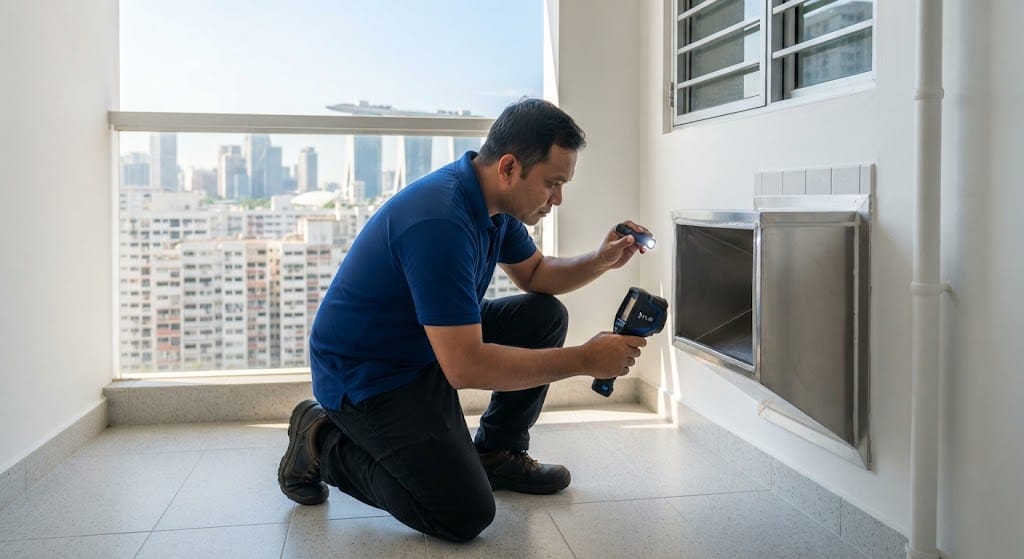
Rising urban temperatures accelerate pest metabolism and drive cockroaches and rats into residential living spaces via refuse chutes and drainage pipes.
The Thermal Multiplier: Meteorological Service Singapore (MSS) Heat Records and the Urban Heat Island Effect
When the Meteorological Service Singapore (MSS) issues heat advisories with daily maximum temperatures soaring past 35°C, the impact reaches far beyond human discomfort and rising air-conditioning bills. Extreme heatwaves trigger biological and behavioral shifts across Singapore’s urban pest populations. High-density residential developments—including HDB estates in Punggol, Woodlands, Choa Chu Kang, and high-rise condominiums across the Central Business District (CBD)—function as massive heat retainers. The Urban Heat Island (UHI) effect, driven by dense concrete mass, dark asphalt surfaces, glass reflections, and thousands of continuous heat-rejecting aircon condensing units, prevents residential estates from cooling down even late at night.
This trapped ambient heat directly impacts underground infrastructure. Municipal storm drains, sewer mains, and subterranean electrical ducts bake under sustained surface temperatures. As underground moisture evaporates, subterranean habitats turn uncomfortably hot and dry. This forces thousands of American cockroaches (Periplaneta americana) and Norway rats (Rattus norvegicus) to abandon sub-slab harborages and migrate upward into residential living spaces in search of cooler air, food, and accessible water.
Ectothermic Kinetics and Metabolic Escalation in Common Pests
Insects are ectothermic organisms. Their internal body temperature, enzymatic activity, and metabolic rate are governed by external environmental temperatures. When ambient temperatures rise from a comfortable 27°C to 34°C+, the biological engine of a cockroach shifts into overdrive.
1. Cockroach Metabolic Surge and Reproductive Acceleration
Higher temperatures accelerate biochemical reactions within insects, increasing respiration and nutrient processing. For the German cockroach (Blattella germanica) and American cockroach, this thermal surge has profound reproductive consequences:
- Compressed Egg Incubation: The incubation period of a cockroach egg capsule (ootheca) drops dramatically. An American cockroach ootheca that typically takes 45 to 50 days to hatch at 25°C hatches in fewer than 20 to 24 days when temperatures hold above 32°C.
- Accelerated Nymphal Instars: Immature nymphs complete their molting cycles in nearly half the standard time, reaching sexual maturity rapidly and causing sudden population explosions.
- Increased Flight and Gliding Behavior: American cockroaches rarely fly in cool conditions. Under extreme thermal spikes, their wing muscles reach optimal operating temperatures, prompting them to take flight from ground drains and flutter-glide directly through open balcony doors and kitchen windows on high floors.
2. Rodent Dehydration Stress and High-Frequency Foraging
Unlike insects, rodents are endothermic mammals, but extreme urban heat stresses them in different ways. Rats possess limited sweat gland distribution, relying primarily on tail vasodilation and salivation for thermoregulation. When ambient temperatures remain high, rats lose body moisture rapidly, experiencing severe dehydration stress.
This physiological drive alters their normal cautious behavior. Under extreme heat, rodents abandon their standard nocturnal routines and embark on aggressive daylight foraging expeditions, following moisture cues into kitchen floor traps, aircon drainage outlets, and water dispensing stations. The abundance of warm, decomposing organic waste in residential refuse chutes provides ample calories, shortening rodent gestation periods to just 21 days and yielding larger, healthier litters.
Refuse Chute Shaft Dynamics: The “Thermal Chimney Effect”
High-rise residential architecture in Singapore incorporates vertical centralized refuse chutes or individual kitchen hopper chutes. During severe heatwaves, these vertical shafts transform into structural transit corridors for vectors via the Thermal Chimney Effect.
Solar radiation heats the exterior concrete walls of high-rise buildings, warming the stagnant air inside the vertical chute shaft. Because warm air is less dense than cool air, it rises rapidly upward through the chute, creating an ongoing convective updraft. This thermal draft pulls volatile organic odors from fermenting food waste in the ground-floor bin center straight up the entire height of the block.
Cockroaches and rats follow these rising heat and odor plumes upward. If individual kitchen hopper units feature degraded rubber seals, warped metal latches, or gaps in perimeter masonry sealant, pests crawling up the chute walls slip directly into apartment kitchens. This explains why residents on the 15th or 25th floor frequently experience sudden cockroach invasions during hot spells, despite maintaining spotless countertops.
Reproductive Kinetics Under Thermal Stress: Temperature vs. Incubation and Maturation Timelines
Entomological kinetics model. Incubation periods drop by over 50% as temperatures approach 35°C.
Heatwave Vulnerability Diagnostic Matrix: Structural Entry Points & Engineering Controls
Preventing heat-driven vector intrusions requires reinforcing the structural interfaces between public utility shafts and your private living space. During extreme heat, standard architectural barriers often fail due to thermal expansion, dried-out elastomeric seals, or evaporated drain traps.
| Structural Zone | Thermal Vector Attraction Driver | Target Vector Threat | Failure Mechanism Under High Heat | Targeted Engineering & Sealing Standard |
|---|---|---|---|---|
| HDB / Condo Refuse Hoppers | Upward convective thermal updraft carrying concentrated food decomposition gases. | Extreme Risk (American Cockroaches, Juvenile Rats) | Original factory foam gaskets dry out, crack, and shrink, leaving 3–6 mm entry gaps along the hopper frame. | Replace factory foam with high-density EPDM/silicone neo-gaskets; install mechanical magnetic catch latches; seal frame-to-wall gaps with fire-rated acoustic silicone. |
| Kitchen Floor Gully Traps | Moisture plumes and cool air exiting domestic drainage pipes into hot sewer lines. | Critical Risk (Sewer Cockroaches, Drain Flies) | Water seals inside the trap evaporate within 48 hours under high heat, allowing dry subterranean sewer pests direct upward access. | Install one-way silicone anti-backflow trap valves; replace plastic drain covers with stainless steel perforated grates (aperture ≤ 4 mm); prime dry drains daily with 500 ml of water. |
| Aircon Pipe Wall Sleeves | Condensation moisture draining through trunking lines creates an attractive thermal-gradient trail. | High Risk (Roof Rats, German Cockroaches) | Plaster filler around trunking cracks due to differential thermal expansion between masonry and PVC pipes. | Ream out crumbling plaster; pack core openings with 304-grade stainless steel wire mesh; seal permanently with expandable polyurethane closed-cell foam. |
| False Ceiling Voids & Risers | Trapped solar heat in unventilated top-floor ceiling voids drives pests downward into aircon ducts. | High Risk (Roof Rats, Masked Palm Civets) | Thermal warping of ceiling access panels creates open access seams around downlights and exhaust fans. | Install magnetic catches on ceiling access panels; seal duct joints with reinforced foil tape; place non-toxic monitoring stations inside void corners. |
| Balcony Planters & Scupper Drains | Surface pooling from automated watering systems offers the only accessible standing water on building facades. | Moderate Risk (Foraging Ants, Aedes Mosquitoes) | Potting soil hardens and shrinks away from pot rims, forming deep, shaded crevices for ant super-colonies. | Mulch planter soil with coarse gravel; install wire leaf-guards over scupper openings; eliminate plant saucer standing water within 1 hour of watering. |
Physical Barrier Engineering: Sealing Refuse Hoppers and Drainage Gullies
Relying solely on aerosol sprays when you spot a cockroach scrambling out of the kitchen rubbish chute is a losing battle. The physical hopper unit must be engineered into a hermetic barrier that stops pests from entering your living space.
1. Retrofitting Refuse Hopper Gaskets
Most older HDB flats and private condominiums feature steel refuse hopper doors fitted with standard open-cell polyurethane foam strips. Under Singapore’s intense heat and humidity, these foam strips compress, turn brittle, and disintegrate within 12 to 18 months. Replace degraded foam with closed-cell EPDM or automotive-grade silicone bulb gaskets. Ensure the gasket compresses evenly along all four perimeter edges when the hopper handle is locked.
2. Anti-Backflow Silicone Drain Valves
The standard water seal inside a floor gully trap relies on a continuous 50 mm water barrier. During severe heatwaves, this shallow reservoir evaporates quickly if the drain is not used daily. Retrofit all kitchen and service yard floor gullies with modern one-way silicone elastomer anti-backflow valves. These engineered valves open downward under the weight of draining wastewater and snap shut magnetically or elastomericly when water flow stops. This creates a physical mechanical barrier that prevents cockroaches and sewer gases from rising into your flat even if the water trap dries out completely.
Hydration Scavenging: Managing Domestic Water Sources During Heatwaves
When outdoor temperatures exceed 34°C, pest survival dynamics shift completely. In moderate weather, cockroaches and rodents forage primarily for calorie-dense carbohydrates and proteins. During severe heatwaves, hydration becomes their single limiting resource. An adult American cockroach can survive for nearly a month without food, but it dehydrates and dies within 5 to 7 days without direct access to water. Rats experience lethal thermal exhaustion even faster, requiring up to 30 milliliters of water daily to maintain metabolic balance.
This biological necessity drives pests out of dry drainage channels directly toward hidden domestic water sources inside your apartment. Inspect and secure these primary moisture reservoirs:
1. Air-Conditioner Condensation Lines and Internal Drip Pans
As households run split-unit air conditioners continuously to combat heatwaves, internal evaporator coils extract liters of water from indoor air. If condensation drain hoses feature slight upward sags or crack along joint collars, pooled condensate water collects inside wall trunking or overflows onto compressor ledges. This creates a continuous, insulated freshwater drinking station that attracts both German cockroaches and roof rats nesting inside external facade voids.
2. Refrigerator Compressor Defrost Trays
Modern frost-free refrigerators utilize an electric heater to melt ice from internal evaporator coils, channeling the meltwater into an open plastic evaporation pan mounted directly on top of the warm compressor motor. In high ambient heat, this warm, humid reservoir creates an ideal breeding pocket. German cockroaches nest along the warm motor wiring, feeding on dust and drinking from the defrost tray without ever leaving the appliance cavity.
3. Sink Overflow Ports and Dishwasher Drainage Pumps
Kitchen sinks feature internal overflow channels that harbor thin films of organic grease and stagnant water droplets. Similarly, commercial and domestic dishwashers retain a small volume of standing water inside their internal filter sumps to prevent pump seals from drying out. Clean sink overflow holes weekly with a flexible brush and enzymatic gel, and ensure dishwasher doors remain latched shut when not loading dishes.
4. Overnight Pet Hydration Stations
Leaving open water bowls on kitchen or service yard floors overnight provides pests with an effortless hydration source. Empty and dry pet water bowls before going to sleep, or switch to gravity-fed, enclosed ball-bearing water bottles for small pets during prolonged heatwaves.
Daily Pest Foraging Intensity & Water Consumption Demand vs. Thermal Index
Behavioral response model. Foraging intensity accelerates exponentially past 30°C as metabolic water loss increases.
Emergency Action Plan: Handling Sudden Heatwave Pest Emergences
When high ambient heat combines with Town Council centralized chute fogging, hundreds of agitated cockroaches can flood high-rise corridors and kitchens simultaneously. Execute this rapid containment protocol:
- Lock and Seal the Kitchen Chute Hopper: Tape the perimeter seam of your kitchen refuse chute hopper with heavy-duty masking tape or plastic film during scheduled Town Council fogging hours.
- Deploy Floor Trap Blockers: Place silicone drain covers or wet towels over all floor gullies in the service yard, kitchen, and dry bathrooms to block subterranean sewer escape routes.
- Close Balcony and Corridor Windows: Shut all outward-facing windows and sliding doors from 4:00 PM to 9:00 PM when thermal convection carries flying American cockroaches up building facades.
- Avoid Indiscriminate Aerosol Spraying: Spraying supermarket bug sprays across living room air scatters fleeing insects into bedrooms and behind built-in carpentry. Trap individual invaders with vacuum extraction or sticky traps instead.
Integrated Chemical and Mechanical Vector Defense in High-Heat Conditions
High ambient heat degrades consumer-grade pest control products rapidly. Many standard over-the-counter insecticide sprays rely on synthetic pyrethroids that break down under direct sunlight and high temperatures. Water-based gel baits dry out, form a hard outer skin within 48 hours, and lose their palatability to foraging insects.
Professional vector defense in tropical environments requires specialized formulations engineered to maintain chemical stability and bait attractiveness under extreme thermal loads:
1. High-Stability Non-Repellent Bait Formulations
Professional-grade indoxacarb, dinotefuran, and hydramethylnon micro-gels incorporate specialized humectants that retain moisture and stay fresh at temperatures exceeding 40°C. Applied as tiny micro-droplets inside dark appliance voids, hinge joints, and cabinet corners, these matrices exploit the heightened feeding activity of heat-stressed cockroaches. Foraging adults ingest the bait and return to harborages, where secondary and tertiary horizontal transfer eliminates hidden nymphs and breeding females via coprophagy (feces consumption) and necrophagy (carcass consumption).
2. Temperature-Stable Rodent Baiting and Exclusion
Standard paraffin wax rodent bait blocks melt and oxidize when exposed to high heat inside external service risers and ceiling voids, rendering the active rodenticide unpalatable. Professional pest managers utilize high-density, weather-resistant extruded blocks containing second-generation anticoagulant rodenticides (SGARs) like brodifacoum or flocoumafen, housed securely inside tamper-resistant stations. Paired with mechanical snap-traps and physical exclusion, this dual approach halts rodent incursions without risk to non-target wildlife or domestic pets.
If recurring heatwaves have triggered an influx of pests into your home or commercial property, DIY measures are rarely enough to stop the breeding cycle. You can schedule a comprehensive structural assessment and barrier remediation through our dedicated pest control services in Singapore to eliminate existing colonies and seal vulnerable entry points permanently.
Frequently Asked Questions on Heatwaves and Urban Pest Surges
Why do cockroaches fly into my high-floor HDB flat during hot, humid nights?
American cockroaches (Periplaneta americana) are ectothermic and require warm muscle temperatures (typically above 30°C) to generate sufficient lift for sustained flight. During hot, humid Singapore nights, thermal updrafts rising along the concrete facades of high-rise buildings allow cockroaches to take flight from ground-level monsoon drains and refuse chutes, gliding through open windows and balcony doors as high as the 20th floor.
Why do supermarket aerosol insecticide sprays seem less effective during severe heatwaves?
High ambient temperatures increase the evaporation rate of aerosol propellants and active synthetic pyrethroids, reducing the duration of airborne chemical contact. Furthermore, heat increases the metabolic rate and enzymatic detoxification pathways in adult cockroaches, allowing them to tolerate sub-lethal chemical doses. Aerosol sprays also act as chemical repellents, causing pests to scatter into wall voids rather than eradicating the primary nest.
What should I do when the Town Council conducts communal refuse chute fogging?
Before the scheduled chute fogging window, inspect your kitchen refuse chute hopper to ensure the rubber gasket is intact and the latch is firmly locked. Apply masking tape around the entire perimeter frame of the hopper door to prevent escaping cockroaches and chemical fumes from entering your kitchen. Keep floor drains covered with silicone mats, and leave windows closed for at least two hours following the fogging operation.
How do rats access air-conditioner compressors and false ceilings during hot spells?
Roof rats (Rattus rattus) are exceptional climbers capable of scaling vertical masonry walls, external electrical conduit trunking, and aircon refrigerant piping. During extreme heat, rats seek out the cool condensation dripping from aircon units and find shelter inside the shaded compressor casing. From there, they chew through soft foam insulation and enter false ceilings through unsealed pipe penetrations in external walls.
Is professional chemical gel baiting safe for homes with cats and dogs during high heat?
Yes. Professional pest control technicians place specialized gel baits in minute micro-dots (roughly the size of a pinhead) inside deep structural crevices, cabinet hinges, appliance motor housings, and behind electrical faceplates where pets cannot reach. These modern formulations have extremely low mammalian toxicity and do not off-gas or release airborne chemicals, making them safe for households with young children and pets.
Secure Your Property Against Climate-Driven Pest Invasions
Singapore’s rising urban temperatures create challenging conditions that accelerate pest breeding and drive aggressive indoor foraging. Relying on temporary DIY fixes while ignoring thermal convection currents in refuse chutes, dried-out floor gullies, and unsealed pipe sleeves leaves your home vulnerable to sudden infestations.
Take proactive control of your home biosecurity before extreme heat drives subterranean vectors into your living spaces. Contact our team of NEA-licensed, BCA-certified vector control specialists today to schedule a comprehensive structural vulnerability audit, install high-grade physical barriers, and deploy temperature-stable eradication treatments to keep your property safe, clean, and pest-free throughout the hottest months of the year.