How to Create a Pest-Resistant Environment in Your Home?
November 17, 2024
Singapore Office Flu Outbreak Prevention: Workplace Disinfection & Commercial Sanitization Protocol (2026 Guide)
August 9, 2026Inter-Monsoon Flash Floods & Sewer Rat Invasions: Complete Ground-Floor Exclusion Guide for Singapore Homes (2026 Edition)
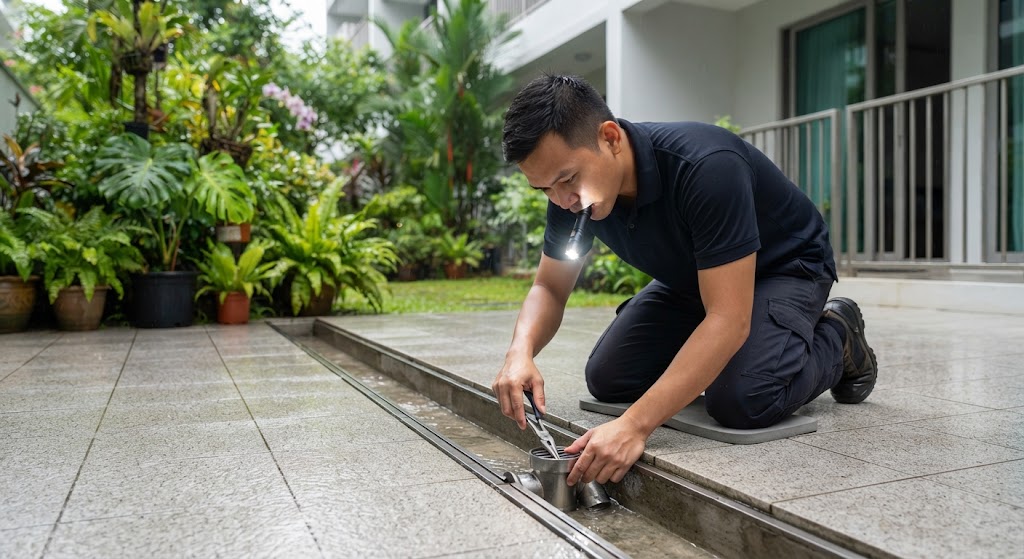
Rising storm drain water during inter-monsoon flash floods forces sewer rats into ground-floor residential properties through unsealed gully traps.
The Inter-Monsoon Hydraulic Surge: PUB Flash Flood Advisories and Subterranean Displacement
Singapore’s inter-monsoon transitional periods (occurring biannually in April–May and October–November) bring intense, localized convective thunderstorms. Driven by strong solar heating and converging coastal sea breezes, these storms dump massive volumes of precipitation over short durations, often exceeding rainfall rates of 70 mm to 100 mm per hour. When the Public Utilities Board (PUB) issues flash flood advisories across low-lying hotspots—such as the Bukit Timah and Dunearn Road corridor, Bedok, Opera Estate, Tanjong Katong, and Pasir Ris—the immediate concern is surface traffic and property water damage. However, an equally severe biological crisis unfolds beneath our feet.
Singapore’s extensive network of covered roadside drains, subterranean monsoon culverts, and municipal sanitary sewer mains fills to maximum capacity within 15 to 20 minutes of torrential rain. As storm runoff surcharges underground pipes, water completely submerges subterranean nesting chambers, dry-weather flow ledges, and earthen burrows. This sudden hydraulic inundation triggers an involuntary mass evacuation of subterranean rodent populations, principally the Norway rat (Rattus norvegicus), commonly known as the sewer rat.
Fleeing drowning and turbulent underground currents, displaced rodents navigate upward through the only unobstructed escape routes available: private lateral drain pipes, domestic gully traps, soil stacks, and perimeter scupper channels. Ground-floor residences—including ground-floor HDB flats, condominium Private Enclosed Space (PES) patio units, and landed terraces or bungalows—sit directly in the path of this subterranean displacement, experiencing sudden, aggressive rodent breaches during and immediately following intense rainstorms.
The Subterranean Hydraulic Mechanism: Why Rattus norvegicus Invades Ground-Floor Homes
Understanding why sewer rats readily breach ground-floor living spaces requires examining their remarkable physiological and semi-aquatic adaptations. Norway rats did not merely adapt to sewer systems; their anatomy makes them formidable aquatic navigators capable of exploiting plumbing infrastructure under severe hydraulic pressure.
1. Semi-Aquatic Endurance and Navigational Capabilities
The Norway rat possesses physical traits that allow it to bypass standard plumbing water barriers with ease:
- Sustained Swimming and Diving: A healthy sewer rat can tread water continuously for up to 72 hours and hold its breath underwater for over 3 minutes. Surging water inside a horizontal sewer line does not drown an adult rat; it simply prompts the animal to dive beneath turbulence and swim toward positive air pressure pockets.
- Hydrodynamic Propulsion: Using its long, scaly tail as an active rudder and paddling with broad hind feet, a rat swims easily against moderate wastewater backflow inside domestic discharge pipes.
- Navigating Trapped Air Chambers: When sewer mains fill with water, air pockets form at the highest points of pipe junctions and domestic S-bends. Rats track these air chambers upward, swimming effortlessly through submerged toilet traps and flooded gully traps to emerge into dry indoor rooms.
2. Skeletal Flexibility and Micro-Aperture Entry
Rats possess flexible clavicles and a hinged, compressible rib cage. If a rat’s skull can clear an opening, the rest of its muscular body can squeeze through. An adult Norway rat weighing 400 grams requires a gap of just 12 millimeters (roughly the diameter of a standard 20-cent coin) to force entry. A young juvenile rat slips through a 6-millimeter crevice. When storm waters submerge outdoor escape routes, rats exploit broken plastic floor grates, unsealed pipe sleeves, and cracked drain collars to escape the rising floodwaters.
Hydraulic Displacement Kinetics: Rainfall Intensity vs. Sewer Surcharge & Domestic Rodent Incursion Surges
Empirical hydrological data model. Incursion risk accelerates non-linearly once rainfall exceeds 50 mm/hr.
Structural Vulnerability Mapping: Ground-Floor Units, PES Condos, and Landed Properties
Different property layouts in Singapore face distinct structural vulnerabilities when rising drain water forces rodents to the surface. Identifying the exact entry pathways on your property ensures targeted physical exclusion rather than relying on ineffective surface repellents.
1. Ground-Floor HDB Units
Ground-floor HDB flats sit directly adjacent to communal perimeter apron drains and centralized waste bin chutes. During torrential downpours, storm water in the perimeter apron drain rises rapidly. Rats nesting in the dry recesses beneath void deck concrete aprons are forced upward. They scale low exterior facade ledges, entering service yards through open kitchen louvers, unsealed washing machine waste outlets, and loose floor gully grates.
2. Condominium Private Enclosed Space (PES) Patio Units
Ground-floor condominium patio units feature sunken landscape drains, garden planters, and floor-to-ceiling sliding glass doors. Heavy rain saturates the garden soil, flooding subterranean burrows within the landscaped turf. Displaced rats seek shelter along the dry, sheltered perimeter of the covered patio. They exploit low sliding door track gaps, unsealed weep holes in planter retainers, and loose scupper drain grates along the patio perimeter.
3. Landed Residential Estates (Terraces, Semi-Detached, Bungalows)
Landed properties possess the highest vulnerability during flash floods due to extensive private drainage infrastructure. Perimeter scupper drains, driveway trench grates, subsurface inspection chambers (manholes), and boundary retaining wall weep holes connect directly to public drainage reserves. When municipal drains surcharge, floodwaters back up into the property’s internal drainage network, forcing sewer rats straight into backyards, outdoor wet kitchens, and ground-floor bathrooms.
| Structural Drainage Zone | Hydraulic Flood Risk Level | Rodent Ingress Mechanism | Common Structural Failure Point | Mandatory Engineering & Exclusion Control |
|---|---|---|---|---|
| Perimeter Scupper Gullies & Apron Drains | Extreme Risk (Direct storm surcharge) | Rats emerge directly from flooded municipal culverts onto surface aprons, seeking dry door thresholds. | Flimsy, lightweight plastic grates or wide-aperture iron grilles (> 15 mm opening). | Install heavy-duty 316-grade stainless steel perforated grates (aperture ≤ 6 mm) secured with tamper-proof masonry anchor bolts. |
| Kitchen & Service Yard Floor Traps | Critical Risk (Subsurface backflow) | Rats swim up lateral discharge pipes, navigate through the water trap, and push off unbolted plastic covers. | Unsecured drop-in plastic strainer covers easily dislodged from below by rodent snout pressure. | Retrofit with lockable stainless steel screw-down floor trap covers; install magnetic anti-backflow silicone valve inserts. |
| Ground-Floor Toilet S-Bends & Soil Stacks | High Risk (Sewer line pressure surge) | Rats dive through the internal water seal of the toilet bowl to escape pressurized subterranean sewer gases. | Open toilet lids and lack of non-return flapper valves in the main private sewer lateral pipe. | Install inline 316-stainless one-way sewer rat valves on exterior private discharge pipes; keep toilet lids weighted or firmly closed during storms. |
| Landed Retaining Wall Weep Holes | High Risk (Sub-slab soil saturation) | Rats nesting behind boundary retaining walls emerge through open PVC drainage weep holes onto patio slabs. | Unscreened 50 mm to 75 mm PVC weep hole outlets passing through boundary concrete retaining walls. | Insert stainless steel spring-loaded weep-hole filter covers; allows hydro-static water release while blocking rodent entry. |
| Aircon Condensate Wall Penetrations | Moderate Risk (Climbing bypass) | Displaced rats scale wet masonry or downpipes, entering wall cavities where aircon trunking enters the unit. | Deteriorated plaster or oversized core-drilled holes around insulated refrigerant piping. | Pack annular gaps with 304-grade stainless steel wire wool; seal permanently with exterior-grade hydraulic mortar or expanding polyurethane foam. |
Physical Barrier Engineering: Drain Proofing and Anti-Backflow Rat Flaps
Chemical rodenticides deployed outdoors during torrential rainstorms are ineffective; rain washes away active baits, and waterlogged pellets dissolve into unusable mush within hours. Permanent, long-term rodent defense for flood-prone ground-floor homes requires robust physical barrier engineering.
1. Marine-Grade Stainless Steel Non-Return Rat Flap Valves
The premier mechanical defense for private landed properties and ground-floor drainage outlets is the one-way non-return rat valve. Fabricated from heavy-gauge 316 marine-grade stainless steel, this engineered device is installed directly inside private lateral sewer inspection chambers or boundary scupper discharge pipes.
- Unidirectional Flow Physics: The curved stainless steel flap hangs vertically on a low-friction hinge pin. Household wastewater flowing outward pushes the flap open effortlessly.
- Mechanical Lockout Against Ingress: When sewer water backs up or a displaced rodent attempts to enter from the street side, the flap rests firmly against an integrated perimeter stop collar. The rat encounters a solid, un-chewable steel barrier that prevents entry into your property’s plumbing network.
2. Anti-Backflow Magnetic Floor Trap Inserts
For indoor service yards and kitchen floor gullies in HDB flats and condominium patio apartments, retrofitting existing floor traps with magnetic-seal anti-backflow valves provides instant protection. These compact inserts fit directly inside standard 100 mm and 150 mm floor trap collars beneath the decorative grate. Under normal dry conditions, rare-earth neodymium magnets hold a silicone flapper tightly shut, sealing out sewer gases, cockroaches, and climbing rodents. When wastewater drains from the floor, the weight of the water overcomes the magnetic resistance, opening the flap temporarily before snapping firmly shut once drainage ceases.
Backyard, Patio and PES Perimeter Sanitation After Heavy Storms
When inter-monsoon downpours subside, floodwaters recede quickly into municipal storm canals, but the biological hazards left behind linger for weeks. Saturated soil, collapsed subterranean burrows, and storm-scattered organic debris create ideal surface conditions for displaced rodents seeking immediate food and new nesting sites.
Ground-floor residents must execute a disciplined post-storm environmental cleanup within 24 hours of heavy weather to eliminate the scent markers and food supplies that attract displaced sewer rats:
1. Managing Saturated Soil and Flooded Garden Burrows
In landed properties and condominium Private Enclosed Space (PES) units, heavy rainfall causes soil liquefaction, collapsing shallow subterranean rodent tunnels. Displaced rats will immediately dig fresh emergency bolt-holes near dry structural footings. Inspect the perimeter where your garden turf meets the concrete patio slab. Look for smooth, clean-cut 50 mm to 80 mm circular holes entering the earth at a 45-degree angle. If active burrows are spotted, do not simply kick dirt back into the hole; pack the void with coarse gravel and broken stone before backfilling to prevent re-excavation.
2. Eliminating Post-Storm Organic Attractants
Convective wind gusts shake loose tropical fruits (such as papayas, mangoes, and starfruit) from garden trees, scattering them across wet turf. Fermenting fruit releases strong ester aromas that hungry rodents detect from hundreds of meters away. Clear all fallen fruit, waterlogged compost piles, and windblown organic debris immediately after a storm. If you feed pets outdoors on your patio or in the service yard, remove all uneaten pet food and wash the feeding bowl before dusk.
3. Establishing the 1-Meter Vegetation Buffer
Dense ornamental landscaping—including creeping fig vines on boundary walls, thick carpet grass, and low-growing bird’s nest ferns—provides continuous shaded cover that allows nocturnal rats to travel undetected along building foundations. Strip all dense groundcover vegetation within a 1-meter perimeter buffer zone around your home’s exterior walls. Replace vegetation with a 75 mm layer of decorative granite pea gravel. Rats dislike crossing exposed, noisy gravel beds where they lack overhead cover from predators.
4. Weatherproofing Sliding Patio Door Sills
Floor-to-ceiling sliding glass doors on condo PES units feature aluminum bottom tracks with drainage weep holes designed to expel wind-driven rain. If bottom brush sweeps or rubber weatherstripping are worn, rats easily compress under the door frame. Retrofit exterior sliding doors with heavy-duty aluminum-backed silicone blade door sweeps, adjusting them so the blade maintains continuous contact with the finished tile floor.
Subterranean Hydraulic Ingress Pathway: From Surcharged Sewer to Residential Kitchen
Schematic mapping the 5-stage mechanical migration pathway of flood-displaced sewer rats entering ground-floor properties.
Emergency Action Plan: Handling an Active Live Rat Incursion During a Flash Flood
If a live sewer rat emerges from a toilet bowl, floor drain, or patio doorway during a heavy rainstorm, execute this immediate containment protocol:
- Isolate the Immediate Room: Close internal doors leading to bedrooms and the main living room immediately. Place a rolled-up towel or heavy draft-stopper firmly beneath the door gap to trap the animal in the bathroom or service yard.
- Do Not Attempt Hand-to-Hand Cornering: Cornered Norway rats can leap over 1 meter vertically and deliver deep, pathogen-laden bites capable of transmitting rat-bite fever (Streptobacillus moniliformis) and leptospirosis.
- Weight Down Toilet Lids and Drain Covers: If the rat emerged from a toilet bowl, shut the lid and place a heavy bucket of water on top. Place a weighted paver over loose floor grates.
- Contact a Vector Emergency Team: Request an emergency callout from an NEA-licensed vector control operator for rapid mechanical cage trapping and same-day physical drain proofing.
Integrated Multi-Tiered Rodent Defense: Exterior Baiting and Electronic Monitoring
Managing rodent pressure around ground-floor residential properties in high-rainfall tropical climates requires continuous perimeter management. Relying purely on indoor traps after an animal has already breached your home is a reactive, stressful approach.
Professional vector control technicians deploy multi-layered Integrated Pest Management (IPM) defense systems designed specifically for Singapore’s intense rain environments through our comprehensive pest control services in Singapore:
- Water-Submersible Exterior Bait Stations: Heavy-duty, lockable tamper-resistant bait stations anchored permanently to concrete footing slabs along property boundary lines. These stations feature elevated internal bait mounting rods that keep rodenticides suspended above standing puddle levels.
- High-Density Wax-Extruded Anticoagulant Blocks: Utilizing specialized moisture-resistant block formulations containing second-generation anticoagulant rodenticides (SGARs) like brodifacoum or difethialone. Embedded with food-grade paraffin wax and anti-fungal mold inhibitors, these blocks remain fresh, palatable, and chemically lethal even after weeks of high-humidity exposure.
- Smart Electronic Infrared Monitoring Sensors: Deploying wireless, battery-powered infrared break-beam sensors inside dark scupper drain channels and false ceiling voids. These non-toxic monitoring units log real-time nocturnal rodent activity spikes, alerting technicians to emerging perimeter incursions before a structural breach occurs.
Frequently Asked Questions on Flash Floods and Ground-Floor Rodent Invasions
Can sewer rats really swim up through a ground-floor toilet bowl during heavy rain?
Yes. Norway rats are exceptional swimmers capable of treading water for 72 hours and holding their breath underwater for over 3 minutes. When municipal storm sewers flood, rats follow rising air chambers up private lateral sewer pipes. The internal S-bend water trap of a standard toilet bowl holds a shallow water barrier that a rat easily dives beneath, surfacing directly inside the toilet bowl within seconds.
Who is legally responsible for clearing rats in flooded drains—PUB, NEA, or the property owner?
Responsibility depends on the exact boundary of the drainage infrastructure. The Public Utilities Board (PUB) manages public storm water canals and flood alleviation structures, while the National Environment Agency (NEA) conducts regular vector control audits along public roadside drains and state land. However, all internal perimeter drains, scupper channels, private sewer lateral pipes, and gully traps within your private lot boundary (or within private condo subsidiary strata boundaries) are the legal maintenance responsibility of the individual homeowner or MCST.
Will installing mesh over landed property retaining wall weep holes cause water damming?
Not if engineered weep-hole covers are used. Installing solid covers or fine cloth mesh can clog with silt and trap hydrostatic water pressure behind the wall, risking structural masonry cracking. Instead, install specialized 316-grade stainless steel spring-loaded weep-hole filters. These feature woven metal filaments that allow free hydrostatic water drainage and fine sediment discharge while physically blocking rodents and large insects from entering.
Why do ultrasonic plug-in rodent repellers fail completely during flash flood seasons?
Ultrasonic devices emit high-frequency sound waves that do not penetrate solid concrete walls, soil, or waterlogged drainpipes. When a sewer rat is fleeing drowning in a flooded drain, the physiological survival drive to find dry ground completely overrides mild auditory irritation. Furthermore, rodents habituate to repetitive sound frequencies within a few days, making ultrasonic plug-ins completely ineffective against structural vector incursions.
What is the best way to secure ground-floor HDB service yard floor traps against sewer rats?
Replace existing lightweight plastic drop-in strainer covers with heavy-gauge stainless steel floor trap covers that screw directly into the floor collar using masonry anchor screws. For additional protection, install a magnetic-seal silicone anti-backflow valve insert inside the drain pipe beneath the grate. This creates an un-openable physical barrier that stops climbing rodents even if outdoor drains surcharge.
Secure Your Ground-Floor Property Against Flash Flood Rodent Invasions
Singapore’s inter-monsoon thunderstorms produce sudden, intense rainfall that overwhelms municipal drainage networks and forces subterranean vectors into ground-floor living spaces. Relying on temporary surface fixes or waiting until an animal breaches your kitchen leaves your household exposed to dangerous vector-borne pathogens and costly property damage.
Protect your home from the ground up with engineered physical barriers, stainless steel non-return rat valves, and professional perimeter vector management. Contact our team of NEA-licensed, BCA-certified vector control specialists today to schedule a comprehensive ground-floor drainage vulnerability audit and secure your property permanently against flood-driven pest incursions.